Signs of the Times

In this blog the New Democratic Party share their thinking on the key policy issues of our time. 

Only the New Democrats have the policies to get us out of this mess

Kia ora, welcome,

Here is the October 2026 New Democrats newsletter. It's also available on our website at https://www.newdemocratsnz.co.nz/blog 

Our newsletter circulation continues to grow. You can help by forwarding this email to friends and family and encouraging them to join our distribution list. You could also re-use parts of it for social media posts. 

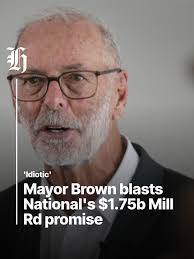
Despite saying that the government can't afford to spend more on health, National has announced it will spend $1.75 billion on building Auckland's Mill Road by 2028 if re-elected. But Auckland Mayor Wayne Brown has called National’s promise “idiotic”, saying a new four-lane road is not the answer to South Auckland’s transport woes. The proposed road is a 21.5km, four-lane corridor running alongside State Highway 1 from Manukau to Drury and is regarded as a Road of National Significance. But Brown told the Herald the $1.75 billion price tag was an “idiotic sum to fix three intersections”. He said the existing dynamic lane, which changes direction to accommodate peak-hour traffic, should be extended instead. 

Also this month the Treasury released its Pre-election forecast update (PREFU) on the state of the economy. Overall it forecast a slow improvement in the economy due to tax revenues being a bit higher than expected - mainly due to inflation remaining stubbornly high. As nominal incomes grow people move into higher tax brackets and therefore pay more tax. The government has also tried to exert some control over government spending. Together this is expected to deliver a government budget surplus in 2028/29 and 2029/30.

Labour released its own financial plan and costing this week. It included reinstating the ($2.5 billion) equal pay claims for 65,000 low-paid care workers over 4 years, that were abruptly cancelled, under urgency, by ACT Minister Brooke Van Velden. But National claims there is a $8.5b fiscal hole in Labour's numbers. Our assessment is that Labour has made some brave assumptions in its calculations. For instance whether it will get the revenue it expects from the Capital Gains Tax remains to be seen. Whether it could settle the Pay Equity claims within the amount it expects is also a big unknown. Finally the amount it has set aside for Health spending is approximately the same as National - so, with some important exceptions of 3 free GP visits; hiring more NZ graduate nurses, and free prescription charges at pharmacies don't expect any major improvements in infrastructure or numbers of doctors.

Time to stop worshiping at the altar of neoliberalism and rebuild our national sovereignty
Both National and Labour have committed themselves to getting to within the 30% debt to GDP ratio - a hallmark of neoliberal economics. This is a self-imposed limit to government spending which prevents more being spent on health, apprenticeships, R&D, or other productivity-enhancing measures. It is an extremely conservative approach to fiscal management. Other OECD countries far exceed that benchmark. For example the debt to GDP ratio for selected countries are as follows: UK 94.3%; USA 123%; South Korea 49%; New Zealand 41.8%; EU 81.7% and Australia 19%. We're not advocating wasteful spending on pet projects. But we are saying that where good quality investment can be made to build more energy generation, to provide better medical care where people need it, and where social housing needs expanding then we should not accept as religious dogma a guideline invented by neoliberal economists more than 30 years ago. For selected infrastructure projects - such as social housing- the government can fund such investment through Direct Monetary Financing (DMF).  The Government’s own bank, the Reserve Bank, can directly finance some infrastructure through low or zero-interest loans. This will cut out the financial middlemen and save taxpayers billions. Provided there is spare capacity (such as raw materials, labour and land) in the economy such spending will not be inflationary. For more information have a look through Bank of England publications or our own Reserve Bank of NZ  publications:
https://www.bankofengland.co.uk/explainers/how-is-money-created
https://www.rbnz.govt.nz/-/media/project/sites/rbnz/files/publications/bulletins/2023/money-creation-in-new-zealand.pdf

Only the New Democratic Party is committed to the reform of the banking system necessary to free our country from a never-ending debt swamp with compounding interest payments. 

Feel free to forward the newsletter onto other interested friends and families. To find out more about the truth about banking take a look at this video: https://www.youtube.com/watch?v=NA1huY0MDjk  

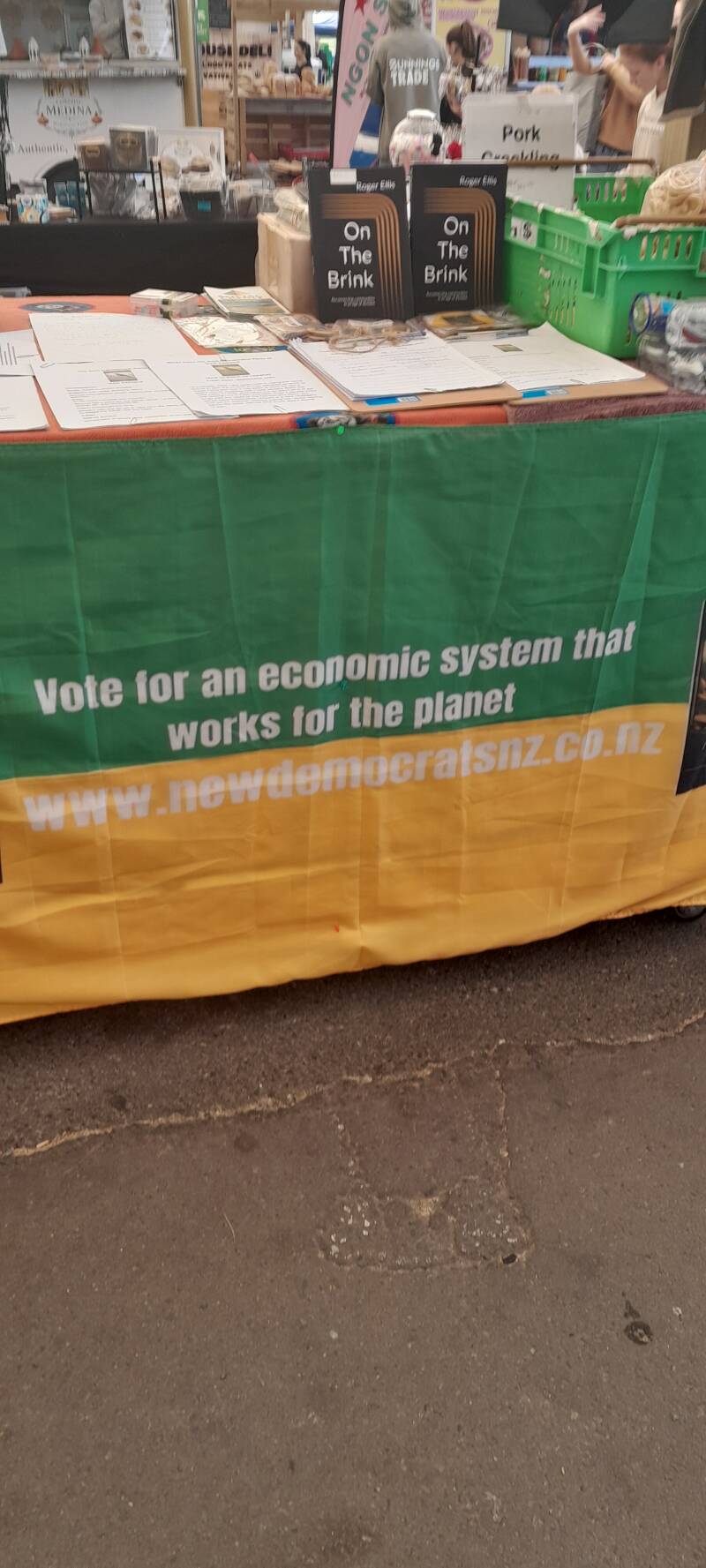
New Democrats are building a grassroots movement to change the way we do politics in New Zealand. Below is a photo of our stall at the markets in Upper Hutt, where Victor Dench is standing as the NDP candidate in Remutaka for Parliament in 2026. 

 IMG-20260907-WA0001.jpg

Also catch us on facebook at https://www.facebook.com/profile.php?id=61590157472997  


Time to shift resources into productive "real economy" businesses and farms 

The last month has been a busy time in politics. We saw an attempted leadership coup in the National Party; a reversal of government policy in regards to the accommodation (Bed Tax) and broader bank levies under the slogan "No New Taxes".

Leadership coup attempt

Presumably the National Caucus decided that the disadvantages of a leadership change this close to an election outweighed any benefit a new leader might provide. Unfortunately an able Cabinet Minister, Hon. Chris Penk, paid the price for being the "numbers man" for the attempted change.

To change the narrative National introduced the slogan No New Taxes. These were missed opportunities to help local government cover the cost of infrastructure caused by increased numbers of tourists. It also meant the chance to take a slice of the mega profits being shipped offshore by large banks also went missing. 

Roading

Labour and National also both scrapped plans to introduce more user pays into road maintenance. By ruling out an increase in roading levies the cost of road maintenance will now have to be covered by the taxpayer, borrowed or not done at all. 

Housing and productivity

New Zealand is also seeing some small correction to the housing bubble that prevailed during the 2000 to 2023 period. After price rises of more than 400% house prices have slowly drifted down - particularly in Wellington and Auckland. On some figures the decline has been as much as 20% over the last few years. But NZ still has too much of its capital tied up in unproductive property investments. We need to get NZ-sourced capital to existing and new kiwi businesses so they can expand, create new jobs and earn export dollars. We can't afford to have a housing market, with a farm tacked on the side, as the basis for our economy. If we want higher wages, better jobs and increased prosperity then we need to raise productivity and economic growth over the long term. That means investing in new businesses and letting kiwi entreprenuers grow and develop in much better conditions than they currently face. A continued focus on house investment will not work. 

Electricity infrastructure

We are also short of local savings and capital to bridge the nationwide infrastructure deficit. Part of that gap could be filled if the government as owners of the big electricity gentailers directed them to reduce the excessive dividend payouts and increase investment of retained earnings into new generation capacity. But the government, like most of its predecessors, seems determined to take a short term view and extract maximum dividends at the cost of new generation capacity. 

Check out the realities of banking: https://www.youtube.com/watch?v=NA1huY0MDjk 

This election we need real change. Vote accordingly. If you're in the Hutt Valley then you can vote for New Democrats' candidate Victor Dench. More on Victor's campaign later. 


Read our latest news

In this space, we share our thoughts on current news and issues. 

It's time to investigate the financial system

For all its importance to the modern economy the amount of research on how money is created is surprisingly sparse. Positive Money UK has produced a series of videos which debunk several myths. https://www.youtube.com/watch?v=bE8i-4HpKlM&list=PLyl80QTKi0gPBcb32paMvXxcq7UUeJskV

Some key facts emerge from even a brief study of credit creation.

Most of the money supply ( 97%) is digital credit created by commercial banks in the process of making loans to customers. Less than 3% of money is notes and coins issued by the Reserve Bank of New Zealand.

Bank loans become deposits in other bank accounts. Banks use a few computer keystrokes to credit the borrowers account and thereby create money. Mortgages and business loans are key ways such money is created.

Most central banks now acknowledge that loans are not based on recycling deposits. They also acknowledge that the money multiplier theory taught in text books is no longer true. https://www.bankofengland.co.uk/-/media/boe/files/quarterly-bulletin/2014/money-creation-in-the-modern-economy

The underlying question is whether a sovereign country should contract out the provision of the nation's money supply to commercial banks, or whether there is a better way. Would the advantages of using public credit (rather than privately manufactured credit) outweigh any disadvantages?

Positive Money NZ advocates for use of direct monetary financing of long term infrastructure investment as a way of promoting productivity and GDP growth. https://www.youtube.com/watch?v=GnswC4mbjiQ 

New Democrats urges the Parliamentary Finance & Expenditure Committee to change its mind and investigate whether Direct Monetary Financing might be  a useful additional tool in the toolkit of the government for long term infrastructure projects. 

Cause for Hope

Season of change: The 21st June marked the shortest day this year. Since then daylight hours have been increasing and the darkness has been receding. On 27th September we will formally recognise the approach of summer with the introduction of daylight saving. The weeks of constant rain have given way, today at least, to a bright sunny day with blue skies. But it's not just in nature that we begin to see signs of hope.

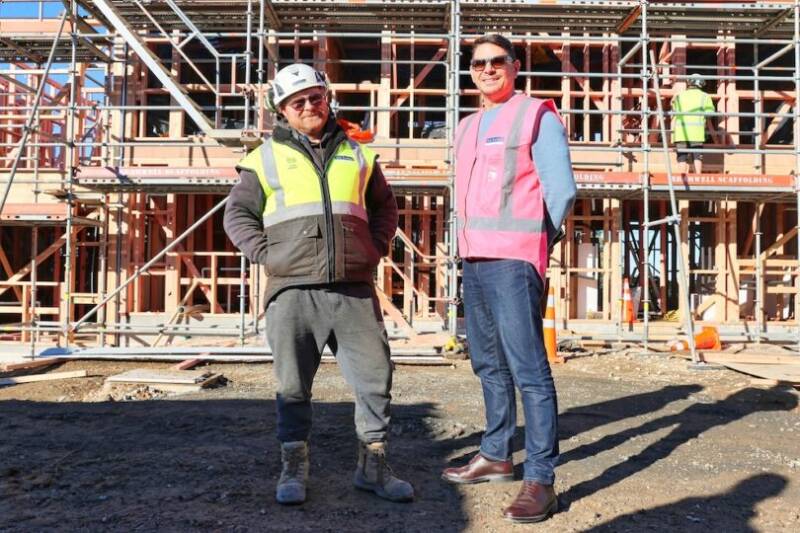
Progress on housing: Against the backdrop of a national housing shortage more than 100 families have expressed interest in six new Habitat for Humanity homes being built in Dunedin. People will “rent to own” the three-bedroom, terraced houses and the first families will move in before Christmas.

As the cost of living increases, the Dunedin Curtain Bank is providing more free, upcycled curtains than ever before to householders in need. “A lot of people are finding it really tough out there,” says Manager Belinda Le Lievre.  “People are looking for ways to save money and so having decent curtains means that you’re not going to spend as much money heating.” Locals donate clean, unwanted or unused curtains and the curtain bank upcycles them, usually lining and altering them to fit clients’ window sizes. 

The charitable trust has been running at least 13 years and used to provide an average of 400 sets of curtains a year. However, in the year to March 2026, it provided 864 sets to people in need in the community, following a trend of the last two years. ( https://dailyencourager.co.nz/ ) 

These community initiatives are positive and welcome. But we also need an acceleration of social housing construction with government as partner to the private sector and the NGO sector. 

India Free Trade Agreement: The Indian FTA is being touted by the National, Labour and ACT parties as an incredible win for New Zealand opening up a market of billions of middle class Indians for kiwi exporters. NZ First is expressing concerns about a commitment to invest in India. (National says the commitment is to simply promote investment). Time will tell but in the meantime kiwi companies should be investigating new opportunities and partnerships for new trade. New Democrats will continue to monitor this agreement to ensure it upholds genuine trade opportunities and has minimal impact on national sovereignty.  https://www.rnz.co.nz/news/politics/707689/todd-mcclay-insists-india-fta-very-clear-after-one-clause-raised-questions 

And finally, ....Joke of the day: Did you hear about the wig thief who escaped from prison? Police are combing the area to find him. 

Building a resilient country

Budget 2026 introduced to Parliament by Finance Minister, Nicola Willis, was long on restraint and short on hope. Cuts to the student "fees free" program breached a 2023 National Party election promise to fund tertiary students.

Read more »

New Beginnings: The New Democratic Party

Too many New Zealanders feel that there is no party to represent them anymore. National seems more concerned about helping their Big Business mates while Labour forgot about working people in the 1980s and these days seems more concerned about woke ideas that are out of touch with most New Zealanders. The New Democratic Party represents a new beginning for those kiwis who are fed up with the politics of the two old parties and who want politics to be concerned with the same things they are concerned with- decent well-paid jobs, affordable housing, a health system that works, law & order, and a clean green environment that we and future generations can enjoy.

Read more »